Journal / PAP
PAP vs peroxide: what actually happens to your teeth
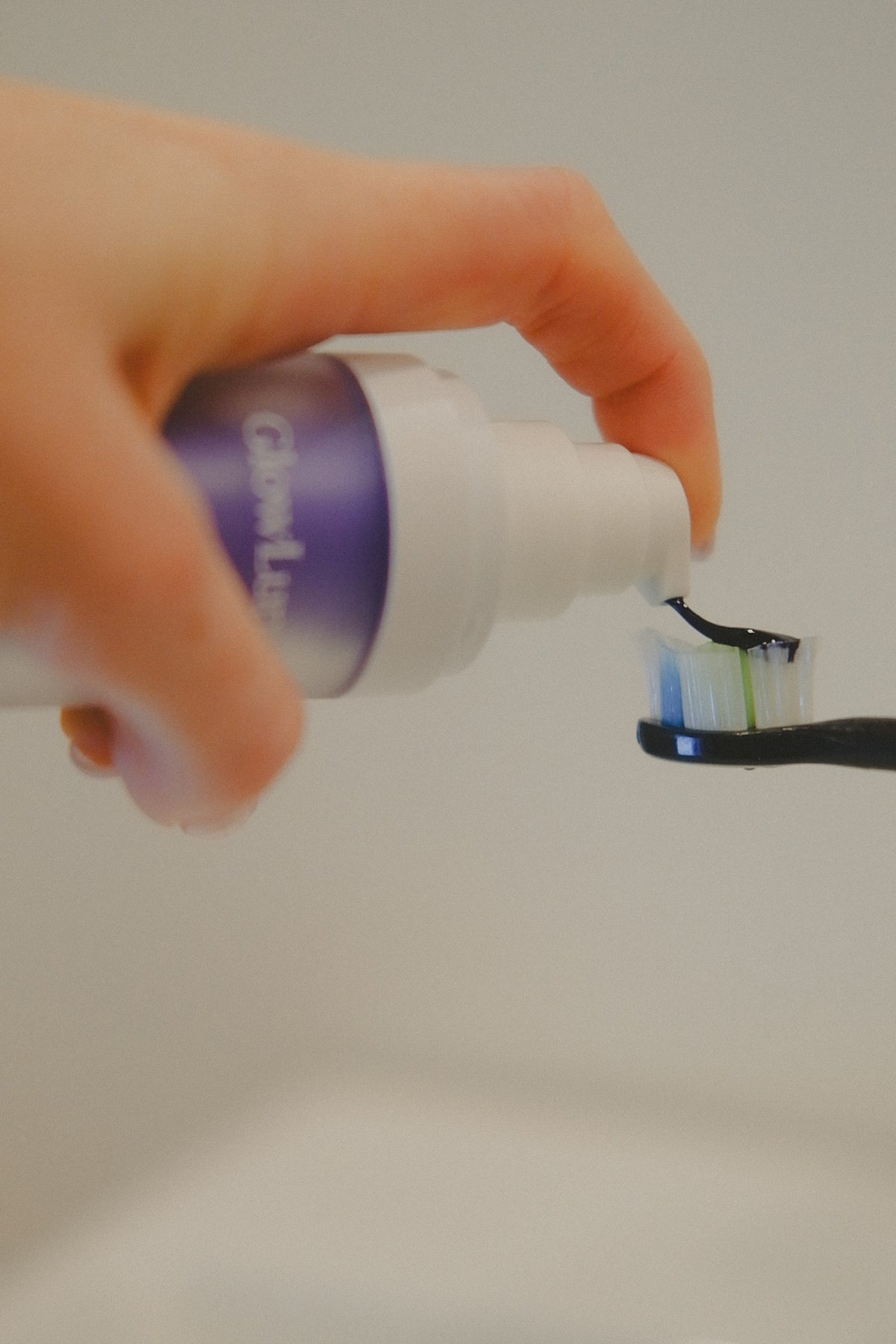
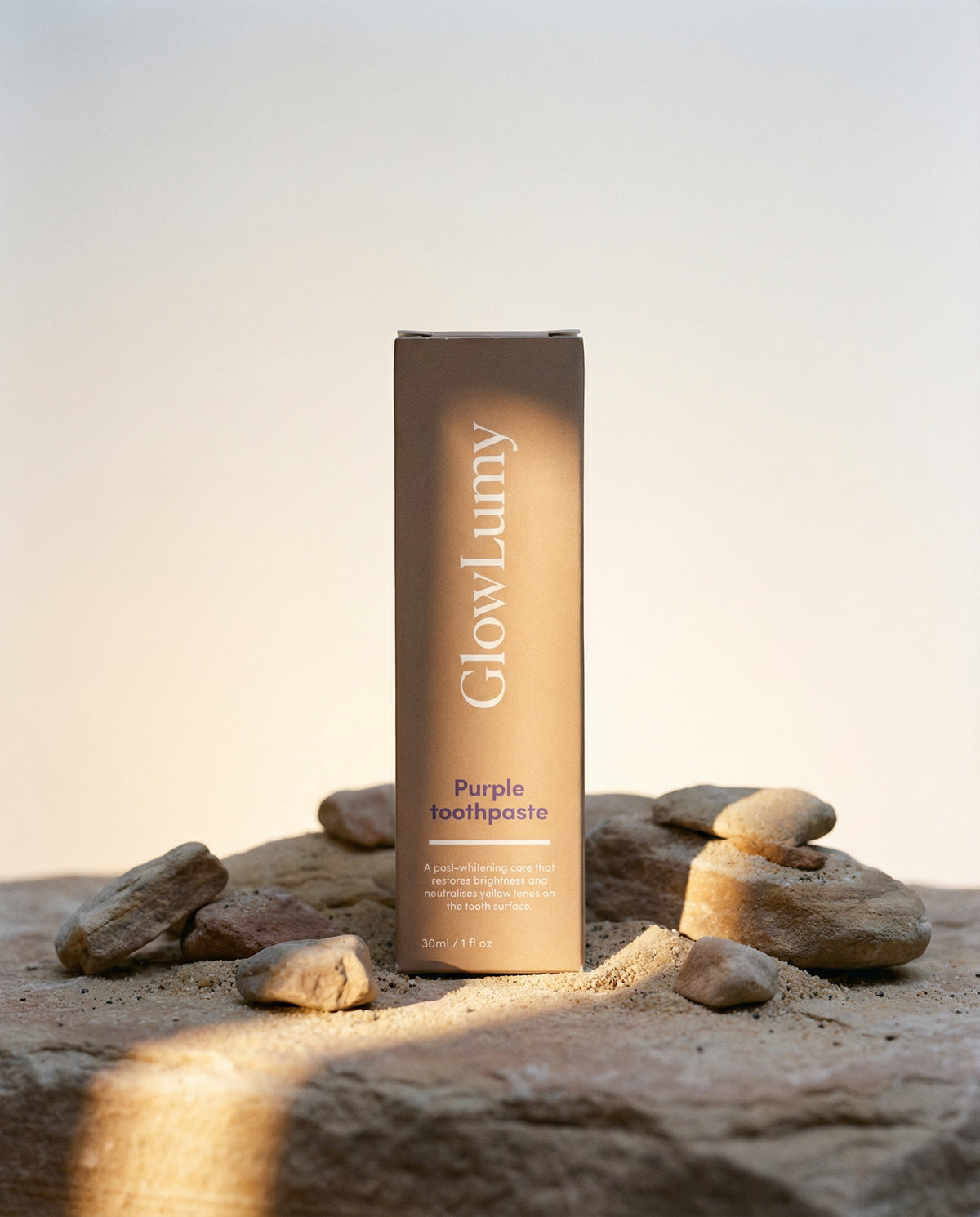
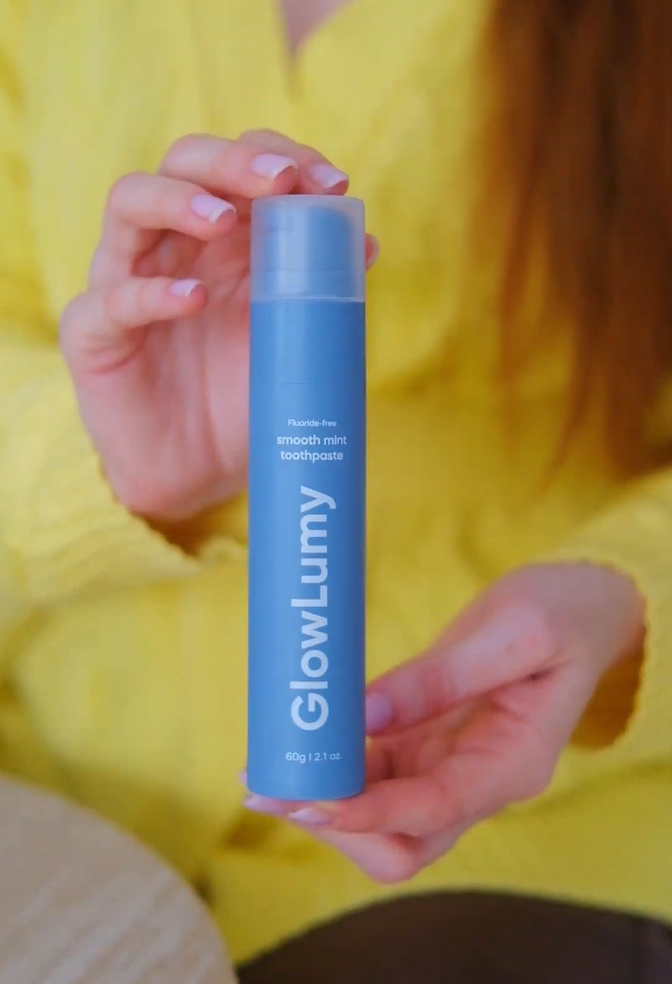
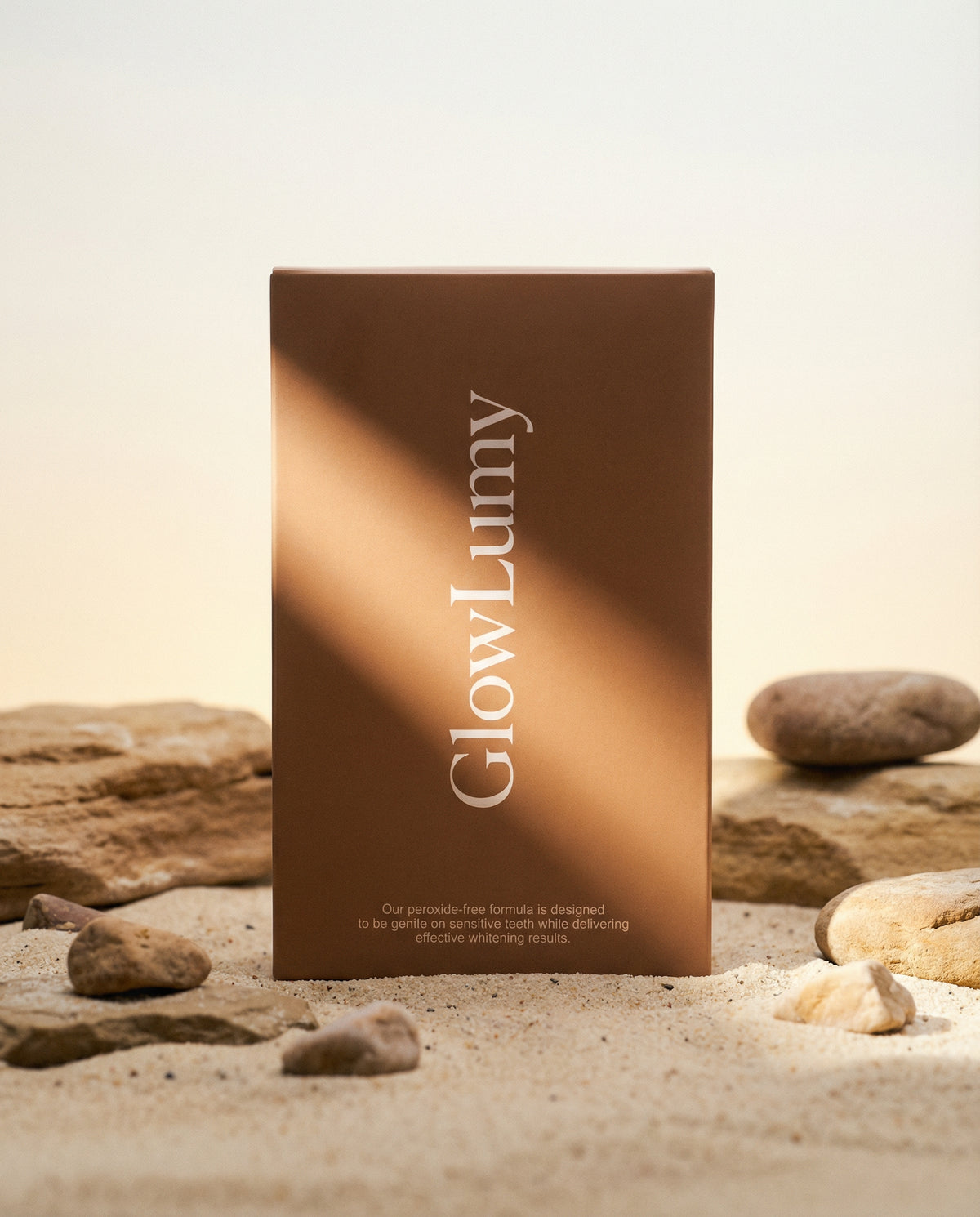
Almost every whitening product on a shelf works through one of two molecules. Hydrogen peroxide has been the standard for forty years. PAP, short for phthalimidoperoxycaproic acid, is the newer one, and the one Glowlumy is built on. They both bleach stains. The difference is in how.
What a stain is
Tooth stains are long, coloured molecules called chromogens. Coffee, tea, red wine and tobacco leave them in the thin protein film on the enamel and, over years, in the enamel itself. To make a tooth look whiter you break those long molecules into shorter, colourless ones. Both peroxide and PAP do that by oxidation.
How peroxide does it
Peroxide splits into water and free radicals. The radicals are what break the chromogen apart. The problem is that free radicals are not selective: they react with whatever they meet, including the protein scaffold inside enamel and the tubules that lead to the nerve. That is where the sharp, electric sensitivity after a whitening session comes from. It is also why the EU caps consumer products at 0.1 % hydrogen peroxide and leaves the strong gels to dentists.
How PAP does it
PAP oxidises the chromogen directly. It transfers oxygen to the stain molecule without first splitting into free radicals, so there is nothing left over to attack the enamel. Studies comparing the two found PAP produced a comparable colour shift on stained enamel with no measurable change to surface hardness. In everyday terms: the stain goes, the tooth stays as it was.
What that means for you
- Sensitivity. Peroxide users commonly report it. PAP users in our reviews mostly do not, including people who had given up on whitening because of it.
- Gums. Peroxide gels can leave white, irritated patches where they touch gum. PAP does not bleach soft tissue the same way.
- Speed. A dentist's high-concentration peroxide session is faster. At the concentrations you can buy and use at home, a PAP course and a peroxide course land in a similar place after two weeks.
- Daily use. You can brush with a PAP toothpaste every day. Nobody recommends that with peroxide.
What neither of them does
Neither molecule changes the colour of veneers, crowns or fillings, and neither removes the grey tone that comes from inside a tooth after trauma or certain antibiotics. If your discolouration is intrinsic, talk to a dentist before buying anything.
The short version
Peroxide whitens through free radicals, which is why it stings. PAP whitens without them, which is why it does not. If you have had a bad experience with whitening before, that is the whole reason to try the other molecule.
Questions people ask
Is PAP as strong as peroxide?
Over a full course PAP produces a visible, comparable shift on surface stains. Peroxide can be faster at high dentist-only concentrations, but those are the concentrations that cause sensitivity.
Why is peroxide limited in the EU?
EU cosmetics rules cap hydrogen peroxide in products sold to consumers at 0.1 %. Higher concentrations are restricted to dental professionals because of the risk of sensitivity and gum irritation.
Can I use PAP every day?
PAP toothpastes are made for daily use. Strips are a course: thirty minutes a day for two weeks, then a break.
Glowlumy products are cosmetics. They lighten stains on natural enamel and are not a treatment for any dental condition. If you have pain, receding gums or dental work you are unsure about, ask your dentist first.